
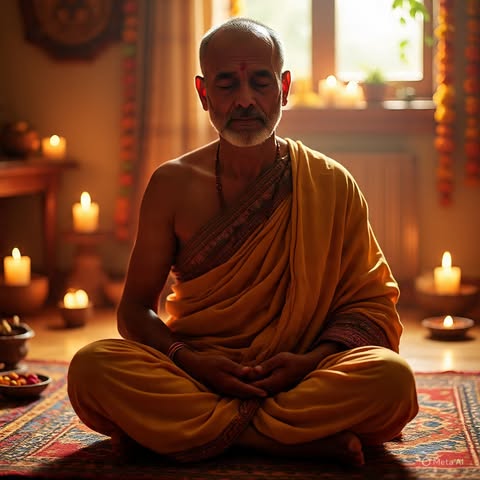
Meditation beyond the cushion
Meditation is often misunderstood as an activity reserved for silent retreats or monasteries. In truth, meditation becomes transformative only when it enters daily life. A sustainable meditation practice adapts to household responsibilities, professional duties and emotional fluctuations rather than escaping them.
Classical traditions describe meditation not as withdrawal, but as refinement of attention. When attention stabilizes, clarity emerges naturally in action, speech and relationships.
Starting where you are
For most practitioners, the obstacle is not lack of discipline but unrealistic expectations. Begin with ten minutes daily at a consistent time. Sit comfortably, allow the breath to settle, and observe without force. The mind will wander — this is not failure but part of the process.
Consistency is more important than intensity. A short daily practice rewires attention more effectively than occasional long sessions.
Bringing awareness into action
Meditation continues beyond seated practice. Eating, walking, listening and working can all be approached with mindful attention. Notice bodily sensations, emotional reactions and habitual responses without judgment. This awareness gradually weakens reactive patterns.
Challenges and adjustments
Restlessness, dullness and doubt arise naturally. Instead of forcing concentration, gently adjust posture, breathing or duration. Seek guidance when confusion persists. Meditation matures through patience, not struggle.
Ethical grounding
Classical systems emphasize ethical alignment as the foundation of meditation. Truthfulness, moderation and compassion stabilize the mind. Without ethical grounding, meditation becomes fragile.
Conclusion
Meditation is not an escape from life but a way of inhabiting it fully. When practiced gently and consistently, it becomes a quiet companion through all phases of life.
— Swami Prakash
This article — "Meditation in Daily Life: Building a Sustainable Inner Practice" — is part of our ongoing effort at VividAshram to share practical, trustworthy guidance on holistic living. Our approach blends the classical teachings of Ayurveda, the practical discipline of yoga, and modern approaches to wellbeing so readers can apply these ideas safely at home.
Wherever relevant, we provide links to our services and resources: see our About page for background on the teachers, Ayurveda for carefully herbal formulations, and sadhana seva for retreats and in-person programs that reinforce practice.
Please treat the content here as educational and introductory. We avoid medical claims and urge anyone with health concerns to consult a qualified practitioner. For tailored guidance you can request a personalized consultation through our Contact page.
We aim for clarity and usability: each product or practice page includes ingredients, usage notes, and helpful cautions so you can make an informed choice. If you find this article useful, consider supporting our community through donations or join our upcoming retreats.