Understanding Sādhanā
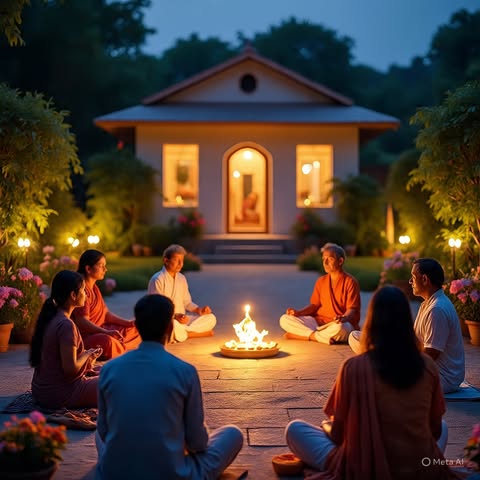
The Sanskrit word Sādhanā refers to a disciplined inner practice undertaken with
sincerity and continuity. In the ashram tradition, sādhanā is not limited to meditation alone.
It includes ethical conduct, self-observation, study, restraint, and alignment of daily life
with higher values.
Historically, sādhanā was considered essential for sharpening awareness and reducing the
distractions of ego, fear, and desire. Rather than escaping the world, practitioners learned
to observe it clearly — responding with balance instead of impulse.
Classical texts describe sādhanā as a gradual process. Progress was measured not by mystical
experiences but by stability of mind, compassion in action, and freedom from reactive habits.
This practical orientation allowed sādhanā to remain grounded and accessible.
Seva — Service as Spiritual Discipline
Seva means selfless service. Within Indian ashrams, seva was never charity in the
modern sense. It was a conscious practice of dissolving personal importance through useful
work performed without expectation of reward.
Tasks such as cooking, cleaning, teaching, farming, and caring for others were all treated as
opportunities for inner growth. By serving the collective, individuals learned humility,
cooperation, and responsibility — qualities essential for social harmony.
Importantly, seva balanced introspective practices. Where sādhanā refined the inner world,
seva grounded practitioners in reality, preventing isolation or spiritual arrogance.
Ashram Life as a Cultural Institution
Traditional ashrams functioned as living institutions where discipline, silence,
and learning were practiced together. These were not abstract ideals but
lived experiences shaping character, responsibility, and wisdom.
Discipline (अनुशासन)
Discipline in an ashram was not punishment but alignment.
Daily routines created stability of mind and body, helping
individuals conserve energy and act with clarity.
Rising before sunrise, maintaining cleanliness, mindful speech,
and consistency in effort were considered essential foundations
for inner growth.
Silence (मौन)
Silence was a tool for sharpening awareness.
Periods of intentional quiet allowed practitioners
to observe thoughts without interference.
In a world filled with noise, silence cultivated patience,
discernment, and emotional balance.
Learning (अध्ययन)
Learning in ashrams was experiential.
Knowledge flowed through dialogue, observation,
and lived example rather than memorization.
Students learned ethics, sciences, healing,
and self-knowledge in an integrated way.
Modern Relevance of Sādhanā & Seva
In the modern world, stress, isolation, and overstimulation have become common challenges.
The principles of sādhanā and seva offer practical tools for restoring balance without
dependence on belief systems.
Practices such as mindful routine, ethical restraint, community service, and reflective study
help individuals regain agency over attention and behavior. These are not religious mandates
but human skills refined over centuries.
By understanding these traditions as cultural knowledge rather than commercial offerings,
their value becomes universal — applicable across backgrounds, professions, and stages of
life.
Daily Life in an Ashram
Ashram life follows a rhythm designed to balance body, breath, work, and reflection.
Each day is structured to support clarity without rigidity.
Gurukul System of Learning
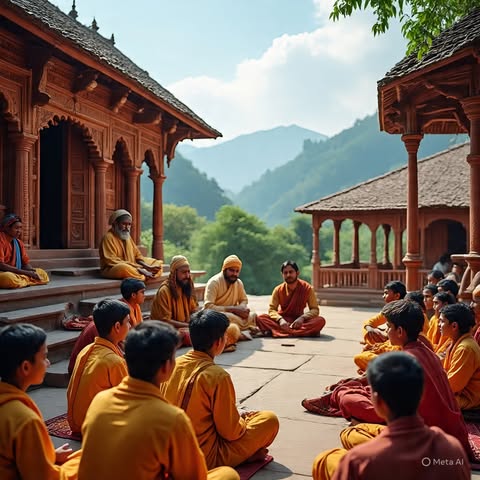
The Gurukul system emphasized character before career.
Students lived with the teacher, learning through observation and service.